Get Started
Disable Plugins and Change Theme from phpMyAdmin
- Updated date
- Updated Apr 2, 2026
Key Takeaways
Deactivating plugins and changing themes from phpMyAdmin can help regain access to the WP Admin dashboard. This method is useful when errors prevent dashboard access.
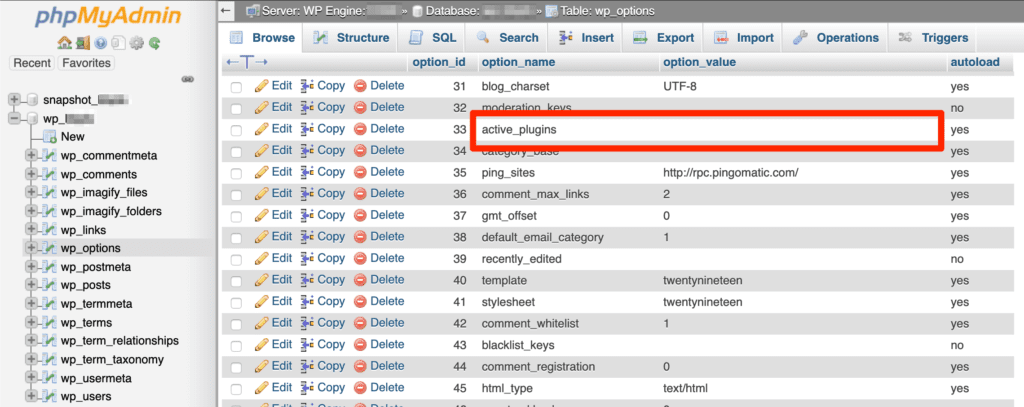
To disable plugins from phpMyAdmin, locate the active_plugins row in the wp_options table and delete its content. This action resets the site to a default state.
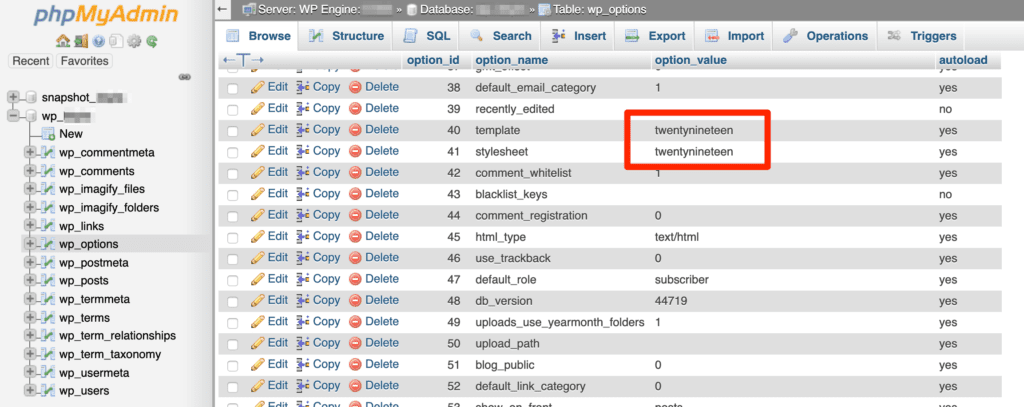
Changing themes from phpMyAdmin involves modifying the template and stylesheet rows in the wp_options table with a new theme name. Ensure the new theme is installed on the site.
Troubleshoot errors with WP Engine error logs for further assistance.
Deactivating plugins and changing themes is typically done easily from the WP Admin dashboard. However, if an error prevents access to the wp-admin dashboard, plugins and theme can be disabled from the database instead.
This is often helpful if a plugin or theme is causing the site to not load, by resetting the site to a more default state to regain wp-admin access.
Disable Plugins from phpMyAdmin
- Log in to the User Portal
- Select the environment name
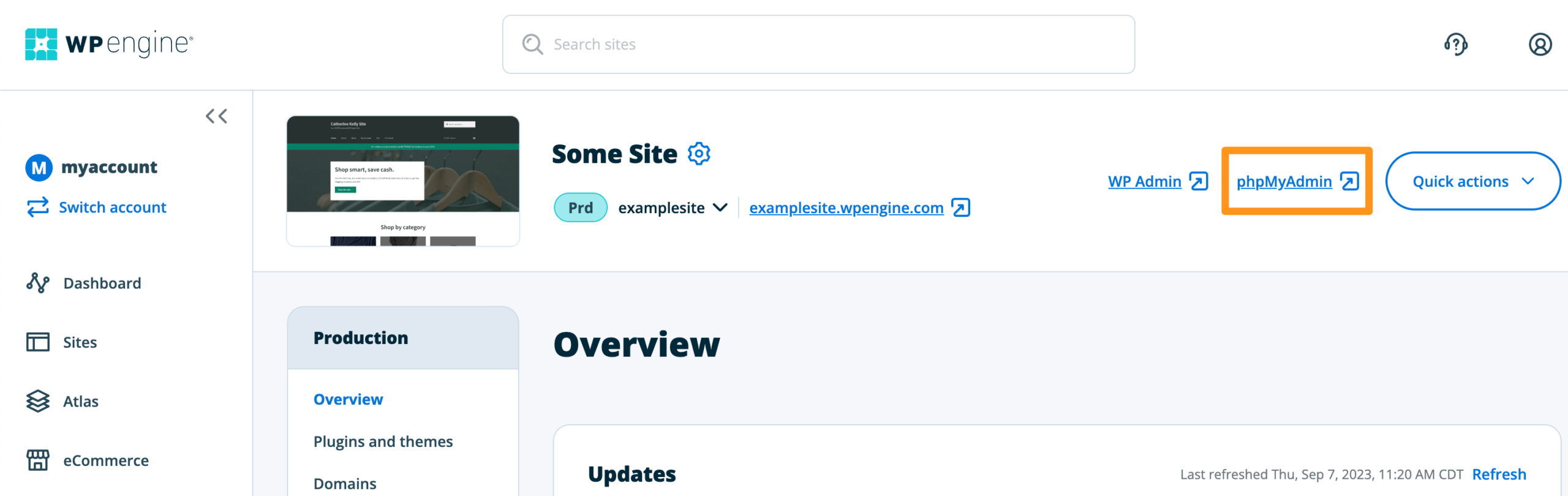
- Click phpMyAdmin at the top
- Select the database name (typically
wp_environmentname) - Select the wp_options table
- Take into account any custom database prefix, where
wp_may be replaced with something else.
- Take into account any custom database prefix, where
- Locate the row called active_plugins
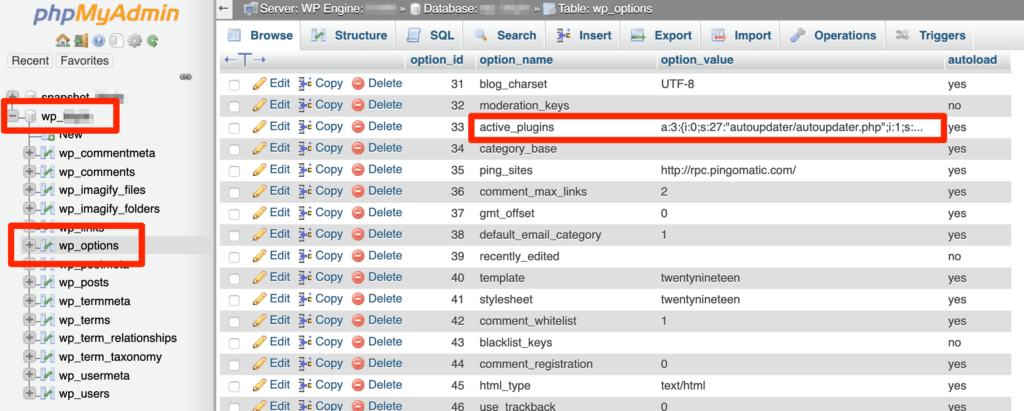
- Delete everything in the option_value column on this row
- Press Enter or Return on the keyboard to save
Change Theme from phpMyAdmin
- Log in to the User Portal
- Select the environment name
- Click phpMyAdmin
- Select the database name (typically
wp_environmentname) - Select the wp_options table
- Take into account any custom database prefix, where
wp_may be replaced with something else.
- Take into account any custom database prefix, where
- Locate the rows called template and stylesheet
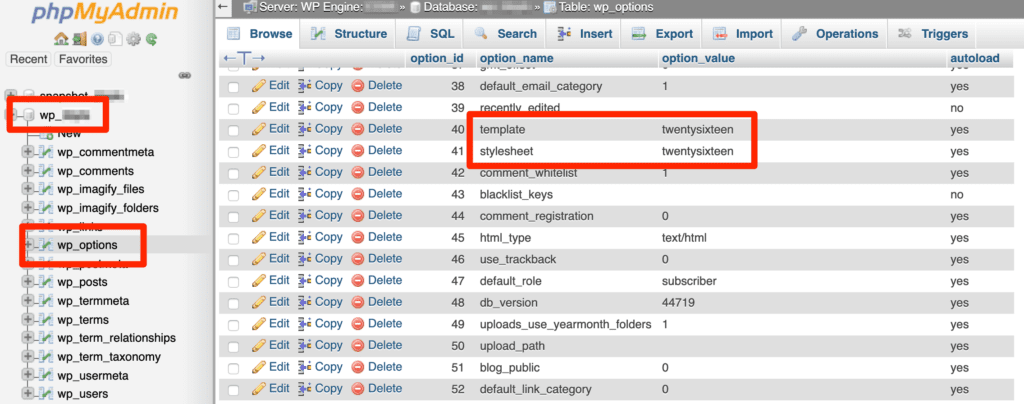
- Modify the option_value for both of these rows to a new theme name
- EX:
twentynineteen
- EX:
- Press Enter or Return on the keyboard to save
NEXT STEP: Troubleshoot errors with the WP Engine error logs